


Popular GenAI models compatible, quantized and optimized for specific edge hardware
Reduces time to market, hardware investment, and power consumption using pre-optimized and device compatible models
.png?width=250&height=172&name=Frame%201488%20(3).png)
.png?width=250&height=173&name=Frame%201491%20(1).png)
.png?width=250&height=173&name=Frame%201492%20(1).png)
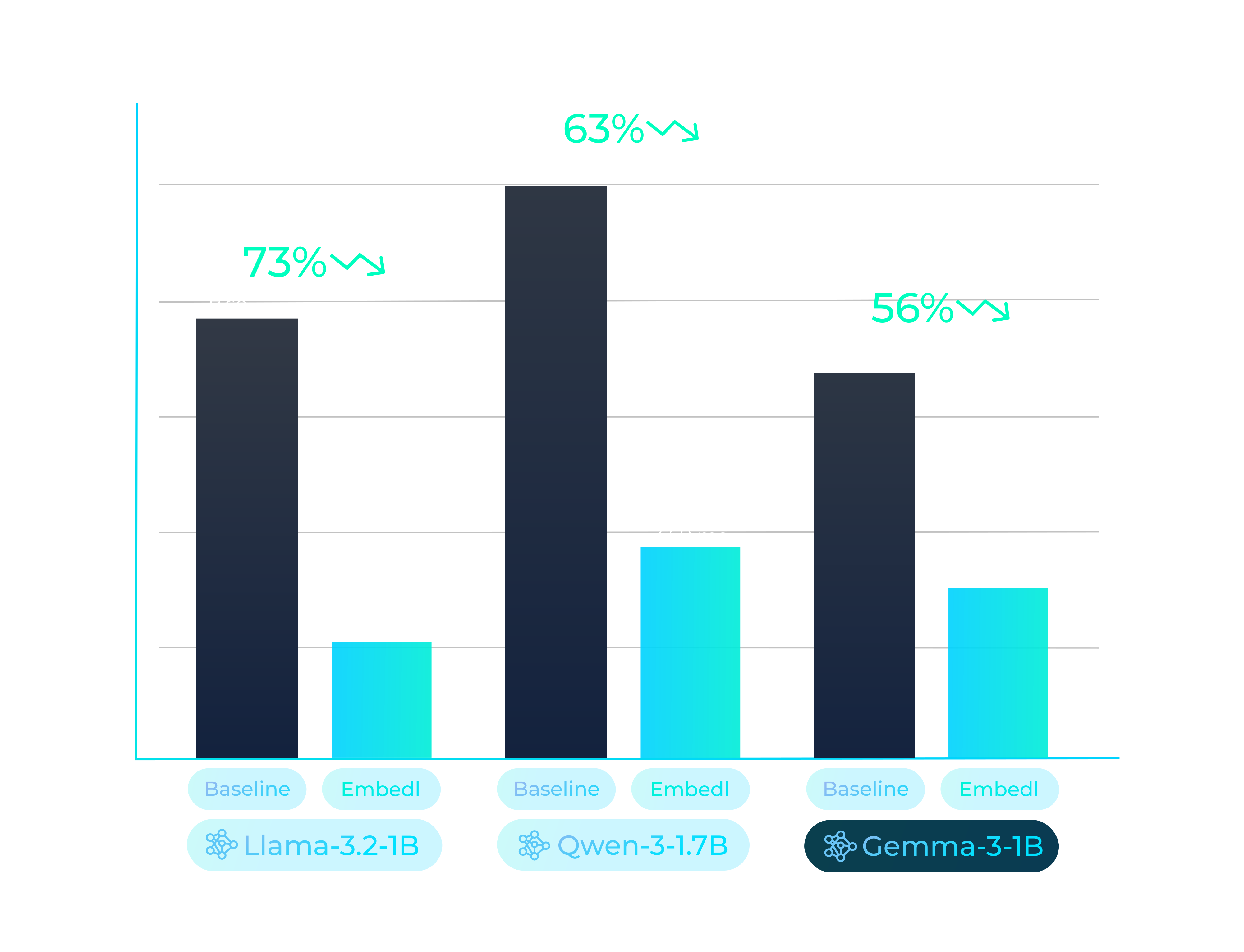
Proven performance on real edge hardware
Validated model optimizations that cut latency and energy use
Deployment-ready packages
Full code, kernels and recipes to run models optimally on specific devices
Find the best model
Quickly try out different models for your use case before fine-tuning and licensing
Save time, cost and power
Reduce time to market, unit costs and power consumption using pre-optimized and device compatible models
Strong GenAI focus
Supplying the latest LLM, VLM, VLA models for tomorrow's edge AI products
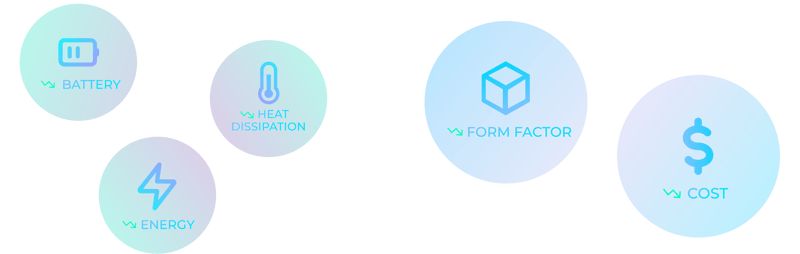
Performance shapes hardware and unit economics
Better model efficiency unlocks smaller and cheaper products by lowering power and cooling needs

Run optimized edge models with familiar tooling
Drop-in vLLM integration to test Embedl models in minutes
from vllm import SamplingParams
from embedl.models.vllm import LLM

model_id = "embedl/Llama-3.2-3B-Instruct-FlashHead"

if __name__ == "__main__":
    sampling = SamplingParams(max_tokens=128, temperature=0.0)

    llm = LLM(
        model=model_id,
        trust_remote_code=True,
        max_model_len=131072
    )

    prompt = "Write a haiku about coffee."
    output = llm.generate([prompt], sampling)
    print(output[0].outputs[0].text)
Pricing that scales
One commercial license per model and hardware combination
- ✓ Always free for non-commercial and academic use. Also free for commercial use by companies with less than 250 employees and annual revenue of less than €10M (see license for details).
- ✓ Enterprise pricing is determined by the specific model + hardware combination you deploy.
- ✓ There is no per unit cost, you can run Embedl Models across unlimited devices.
- ✓ Try different models for free before licensing for commercial use.
Get started with Embedl models
If you're an enterprise interested in fine tuning and commercializing these models, please contact sales.
Frequently Asked Questions
We support specific model-hardware combinations, primarily NVIDIA edge platforms (e.g. Jetson, Orin, Thor). Each supported combination is explicitly documented.
We support publicly available foundation models from sources such as HuggingFace. Each supported model is tied to a specific hardware target and comes with a reproducible optimization and compilation recipe.
We do not support proprietary or custom customer architectures.
Yes. All models come with reproducible steps from the original HuggingFace model to the compiled artifact, allowing you to fine-tune or adapt the model before compilation.
HuggingFace provides model weights. Embedl provides everything required to run the model efficiently on real edge hardware: compilation, runtime support, and verified performance.
For supported hardware, you should be able to run a model in minutes. No toolchain setup, manual optimization, or trial-and-error required.
Yes. These models are designed for production deployment, not only research or demos.
We mainly support publicly available base models with fully reproducible pipelines.
Contact us! Model and hardware combinations are possible to request and we can prioritize it for you.
Embedl provides deployment-ready, hardware-specific LLM, VLM, and VLA model packages for edge devices. Each supported model includes:
- An optimized and compiled binary for a specific hardware target
- A fully reproducible recipe from the original Hugging Face model to the compiled version
- Runtime components, kernels, and configuration needed to run on the device
Everything is designed to work out of the box for that exact model–hardware combination.
Deployment-ready means you can go from a fresh device to a running model in minutes, not weeks. We handle the optimization, compilation, compatibility constraints, and runtime integration for the supported hardware target. You don’t have to debug toolchain mismatches, quantization edge cases, or unsupported operators.
Most developers can run quantization tools.
The real friction appears when:
- A quantized model fails at runtime on the target device
- Operators are unsupported
- Performance is far from theoretical expectations
- Toolchain versions conflict
- Results are not reproducible
Embedl solves compatibility and performance at the model–hardware boundary and provides a tested, validated, reproducible path that actually runs on device.
We aim for significant gains — not marginal ones.
In supported combinations, improvements may include:
- Substantial latency reductions
- Higher throughput
- Lower memory usage
- Reduced power consumption
Our goal is to make previously impractical deployments feasible, not to deliver minor percentage improvements.
Performance benchmarks are published per model–hardware pair.
For supported model–hardware combinations, no integration project should be required.
The model package includes everything needed to run on the target device.
For enterprise customers with broader system integration needs, separate engagements may apply — but our goal is to eliminate integration complexity for supported combinations.
Yes.
Public models are supported via GitHub issues and documentation.
Enterprise customers may receive direct support as part of a license or engagement.
No.
We are not a general model index or compatibility database. We ship fully optimized, validated deployments for specific model–hardware combinations.
If it’s listed, it works.
No.
Every supported model includes a reproducible recipe from the original Hugging Face model to the compiled artifact. The process is transparent and repeatable.
You are not locked into a proprietary opaque system.
Embedl Models are for teams deploying LLMs, VLMs, or VLAs on resource-constrained edge devices who:
- Need predictable performance
- Cannot afford long optimization cycles
- Care about power, memory, and latency
- Want control and reproducibility
It is not designed for hobby experimentation or large-scale cloud inference.
Public models are available for evaluation by anyone - both hobbyists and for-profit companies can freely test our models.
Commercial deployments may require a license depending on company size, the hardware and usage context.
Contact sales for enterprise licensing details.